Sukey Sleeper
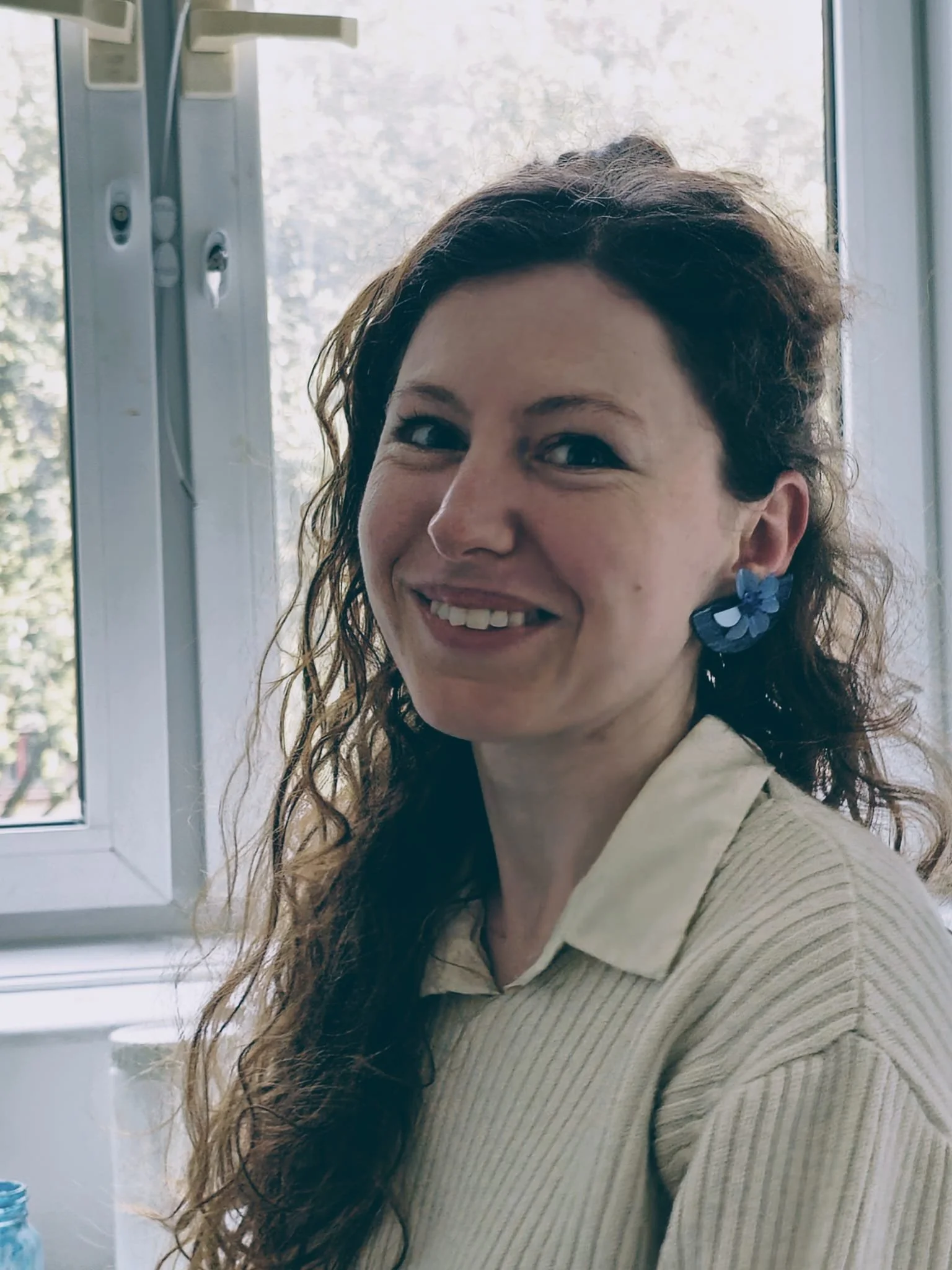
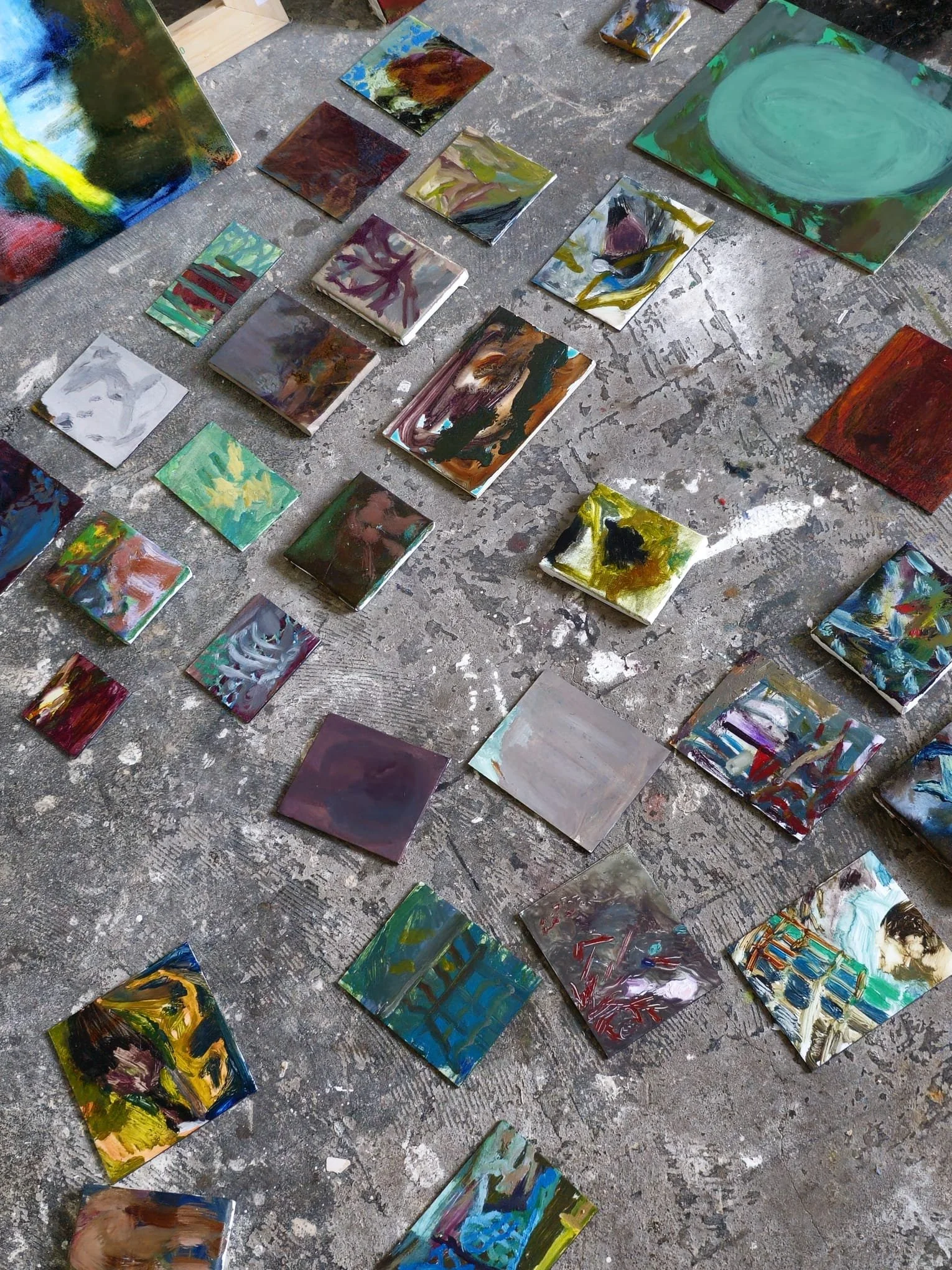
The Lido Stores’ Elliott Marsh sat down with Lido Open 2022 winner Sukey Sleeper to discuss her solo exhibition, ‘Wet Land’, which runs until 3 September 2023.
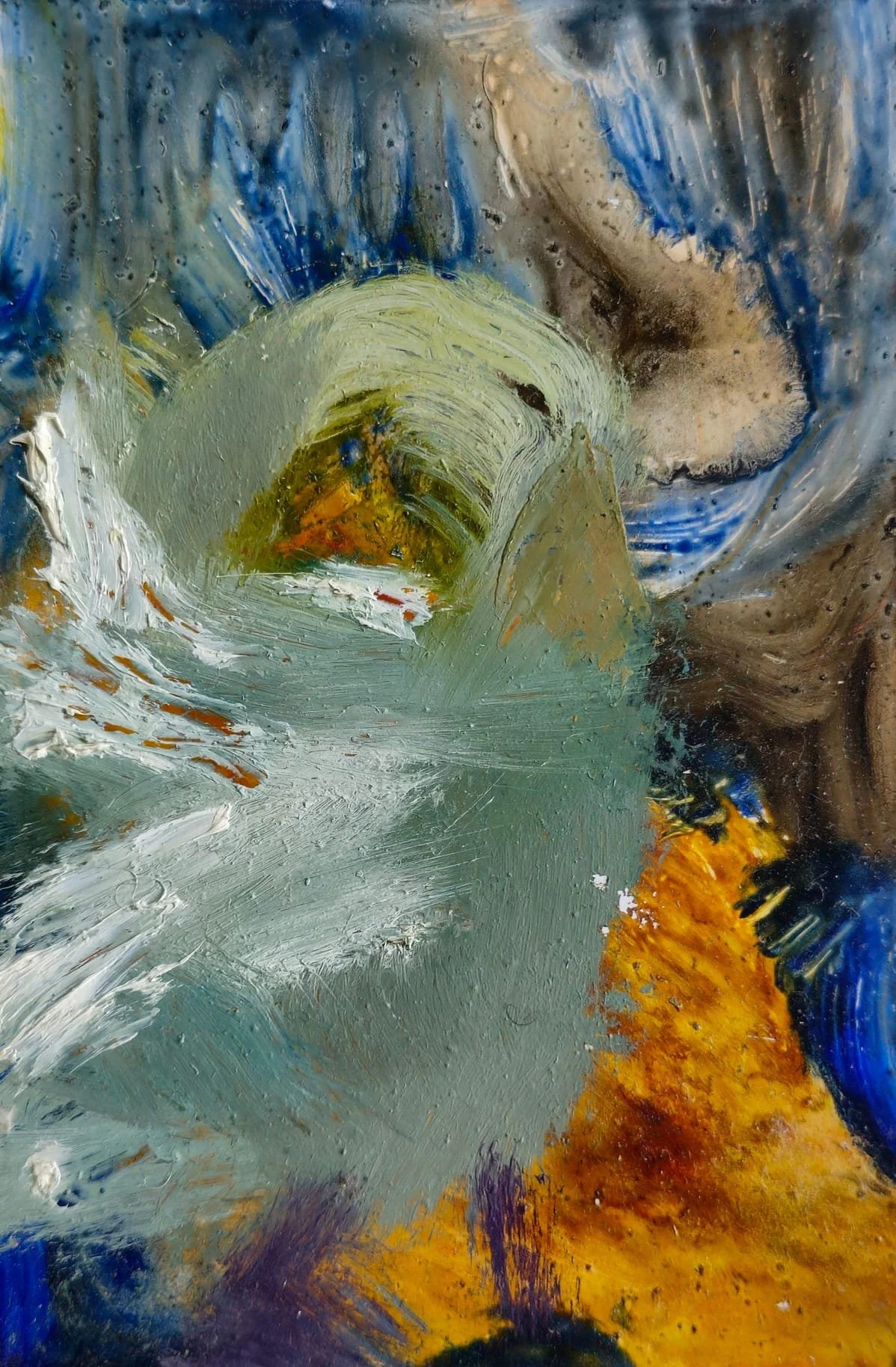
“I wasn’t familiar with The Lido Stores – I think I’d seen the open call shared by someone on Instagram”, she recalls. “The specifications – 2D, painting and drawing within a smaller size limit – appealed to me and fit with the kind of work I was producing at the time.” Sleeper’s submission, ‘Topside’, a delicate depiction of a swan, was shortlisted from more than 400 entries and eventually chosen as the winning piece from the 25 exhibiting artists by guest judge Anne Ryan and Lido Stores owner Kristen Healy. Her solo show presents a collection of 20 small paintings exploring the artificial waterways of north London.
“You get so used to being rejected from open calls”, Sukey says. “I’d just arrived in Greece for a three-week holiday when Kristen’s acceptance e-mail arrived. I opened it when I’d just landed in Athens, expecting a rejection, and was delighted to see it was a ‘yes’. Sod’s law, I’d put everything into storage at three different locations and I wasn’t entirely sure where the painting was. Over the next couple of days, I had my landlady and various family members looking for the painting on facetime. I was directing the prep of the work for hanging and the postage to Margate while on holiday in Greece – of course that would happen when I’m not in the country! I really enjoyed the show, the private view was great fun and I enjoyed visiting the gallery during the day earlier in the year to get a feel for the space with some detachment from the open exhibition.”
A student of Fine Art at Brighton and a B.A. in classics at Cambridge, Sukey worked out of a studio in Cambridge following her graduation in 2015. She’s since moved to Stoke Newington, London, and paints in a studio elsewhere in the city. Her practice, she says, necessarily took a back seat while she was studying, but the desire to paint was never far away. “As artists, you’re often frustrated about not being in the studio enough, and when you’re in the studio, you’re overstretched, and you don’t get enough done. There are a lot of complicated feelings about time and how much time you get to spend on your art. In recent times, I’ve come to be more accepting of the seasonal aspects of it and to be comfortable with the fact I might necessarily spend time away from painting; to see it as something I just do alongside the other things in my life, and to squeeze it in however I can.
“When you’re an artist, there are an endless stream of turning points when you’re practicing. A major one would be 2016-17. I had a lovely friend from school who is an actor. I was quite excited about this idea we had to run a show with both of us, her bringing together writers and actors and me bringing together artists to produce work around a theme in different mediums. We were really bold about it – we had no idea how to do it, we didn’t know anyone, we hadn’t done anything like it before. We applied for a space in six months’ time, and they gave it to us with four weeks’ notice. We had a conversation and said, let’s just do it. We’ll make it work in that time, and we did. Lots of things about it I wouldn’t do now, and the work I made was mostly terrible, but the energy behind this big collaborative effort was an amazing turning point. I was bold in a way I just wouldn’t be now. I’d like to remember how to be that bold.”
From 2020 to 2022, Sleeper participated in the prestigious Turps Banana Studio Programme, an artist-led course focused on practice development through tuition and peer review. “I wanted the input of others, their critique, to push myself and my work,” she continues, “and Turps provides an amazing network of painters to do just that. It’s such an intense, close-knit environment. There’s a significant shift when you come back to the studio and you’re making work in isolation without the eyes of other painters on you, and formal crits to shape your process.”
Turps, she said, represented a major methodological turning point for her practice. “The programme felt like an endless stream of turning points punctuated by some major ones. There was a real feeling of culmination towards the end – drawing all these threads together. I started trying to do less with my paintings and they got a lot more interesting as a result. Not planning so rigidly beforehand and just ‘doing’ more, pre-judging less and editing afterwards, allowed me to have such an explosion of making that it massively opened up my painting to a whole load of possibilities that I’d been stymieing before.”
Sukey entered the Lido Open 2022 at the tail end of her two-year Turps course. Her winning painting was part of an ongoing body of work documenting the environment near her home in north London – the New River, an artificial waterway connecting London and Hertfordshire, and Stoke Newington’s west and east reservoirs – which formed the basis for her solo show at The Lido Stores the following summer. “I had ‘Wet Land’ in mind over the last six to eight months of creating new work. I was focusing on getting used to painting in a new studio and made a conscious decision to not just make work for the exhibition. I took a leap of faith to make work with the show at the back of my mind, but to enjoy creating and hope to see a thread running through the work that would tie it together for the exhibition. That’s a very fluid, faith-based approach but the size of the exhibition space was a benefit in that respect – it was a gift to allow me to take the time developing my own painting practice without the worry of making a certain number or size of works; a balance of freedom and discipline to take a slow, more serious approach to creating.
“In preparation for the exhibition, I wrote down everything I’d been thinking about when creating – through the act of doing that for the show, I saw things coming up time and time again that then informed new paintings or influenced how I worked on existing paintings. I came up with the title ‘Wet Land’ after reading T. S. Eliot’s ‘The Waste Land’ again. That was written over a century ago and contemplates changing modernity. We’re on the brink of a lot of significant global changes right now, particularly environmentally, and that felt like fertile territory to explore.
“Thematically, I have been simplifying what I’ve been working on to explore the more painterly aspects of my work. The paintings in ‘Wet Land’ may not all look like they pull together as a single body of work, but the thread is drawn from the exploration of that small patch of land near me over the course of a year. The imagery, forms and colours have all been pulled and pooled from those observations to make the through line of the exhibition.
“The theme was something that floated to the surface slowly – a gradual process of discovery. I’m trying to capture something temporal and unthinkingly observational to bring back to the studio – there’s a voyeuristic ‘looking at something’ in the work – which is where the subconscious starts to filter through into the paintings. The reservoirs in particular feel quite claustrophobic after so much time spent there. It’s an interesting element that I think comes through the work.
“I’ve been reading a lot about Greek tragedy, about prophecy, human folly and reading omens incorrectly. There’s a strong undercurrent of that feeding the paintings in an unconscious way. It’s very hard to work with that on a visual level so it’s like I’ve had to find something completely unrelated visually to process that stuff – but the thoughts and feelings related to those big themes do seep through to different degrees. The challenge is working out where to nudge that aspect of the paintings, and whether I need to make that firmer, more overt, in future works.
“For ‘Wet Land’, I did a lot of sketching, and painting a lot of watercolours, during my walks. It’s the kind of process I might’ve one time thought was pretentious, clichéd, going out into nature, walking around and making very unthinking observational drawings and watercolours to bring back to the studio. Some of them didn’t translate to oil – there wasn’t enough form there. There was a lot of trial and error involved. How much material do I need to bring back to the studio? How much information do I need to make a painting from those observations? My painting is incredibly fluid, and I often get stuck on a catch I’m interested in, and I’ll keep hammering away at that in different ways. You don’t want to get too samey in your work by pursuing that too hard, though – if I find myself falling into one particular ‘thing’, I try to shift it a bit to avoid stagnation.
“I used to paint a lot of heavily figurative works, paintings of people, and moving into painting within the landscape was a seismic shift. I have a soft spot for the 19th century French landscape painters like Monet. I’ve been thinking about those quite a lot and how in many ways, they seem like easy works – easy to look at and enjoy – but there’s a lot to those paintings. My paintings are very English in their colours and their heaviness, their greyness and the slight unease to them. That’s got me thinking about the relationship between painting and place, which I think is reflected thematically in the exhibition.
“There’s a psychological freedom in working on smaller paintings. It gives me the permission to surprise myself by really ‘discovering’ the painting, taking risks that I might not take if I’m deep into working on a larger painting. I tend to get to the point of a painting being ‘almost finished’ very quickly; my studio is full of small works that are in a state of limbo where they are almost finished but are waiting for me to make the minor changes that will finish them. It could then be weeks or months for me to reach the point where I’ve found those conclusive elements. Sometimes I feel empty of material and know I need something to feed to painting – you can only feed a painting so far before you need to draw on something else, whether it’s external – the physical – or internal.
“I’ve recently started working in silence. I know a lot of artists will listen to music or podcasts whilst painting, but that level of distraction isn’t always helpful for me. It can be more of a form of avoidance. There’s a discipline in silence and forcing yourself to sit with the work without noise. There’s a lot going on with my paintings and stripping back the noise often yields the most productive shifts. I work in bursts – there can be days or weeks where I don’t feel like the paintings are going anywhere, then I’ll have an hour where everything just whirls together and there’s real progress.”
‘Wet Land’ opened at The Lido Stores on 16 August 2023 to a fantastic reception. “It’s always scary showing work”, Sukey says. “It can be so revealing about you as an individual. Because it’s a solo show, I’m exhibiting paintings I wouldn’t normally; the more disparate parts of the practice that feed elements of the other paintings. That’s the aspect I’m really interested in with ‘Wet Land’ – exploring connections between a collection of paintings in a way I wouldn’t normally have the opportunity to do. There’s a sense of unease in a lot of the paintings. I have the outward appearance of optimism, but the paintings have a pessimistic streak I can’t seem to escape. There’s an intensity to the work. That’s what makes artwork interesting – when something unintended and primal comes out. Something we’d prefer to remain hidden.
“There’s a big commitment to doing this – practical, financial, emotional”, Sukey contemplates when the conversation turns to motivations, and how she sees her practice developing from here. “I never wanted to paint full-time. I’ve always been torn between the different bits of my life. I’ve shaped my life around it. I ended up with multiple part-time jobs balanced around paintings. I’ve often thought, why don’t I just get a full-time well-paid job like a normal person and enjoy that stability? Certainly, when I was younger, I wanted to be part of something… You just have this impulse. But I don’t always enjoy showing my paintings. It is a strange thing to want to make a painting when you know that you don’t necessarily want to show that painting to people, to open yourself up to that vulnerability. What does drive me to do that?”
The question hangs in the air. “I have absolutely no idea. Painting causes me a lot of hassle in every aspect of my life, yet I’m pulled to paint, and I couldn’t tell you why I do it. People say, ‘You must love it!’ and I don’t think I do. I don’t feel like there’s a need to express myself, and I can’t put my finger on what my paintings are an expression of. What I do have is a fascination and an interest in painting. There aren’t many opportunities to be focused and interested in something quite weird and pointless and strange in your personal life. I don’t think that’s limited to artists; everyone has that need on some level. Maybe for some people there is a driver to create for the sake of creation alone – it’s why people tinker with things in sheds.
“For me… Doing something without rigid purpose, being interested in something and following that line, giving yourself the permission, the freedom, to do that without focusing on the outcome… There are millions of possibilities with every painting. Which decisions to make and where, which way to nudge it, how to respond to the demands of the painting without quite knowing what you want to achieve with it. And the way through is sometimes through doing, not through thinking. Maybe that’s where the enjoyment lies.”